
Not because ZK tech failed. It didn’t. ZK proofs are real. STARKs are real.
The failure is simpler and more painful: demand didn’t stick.
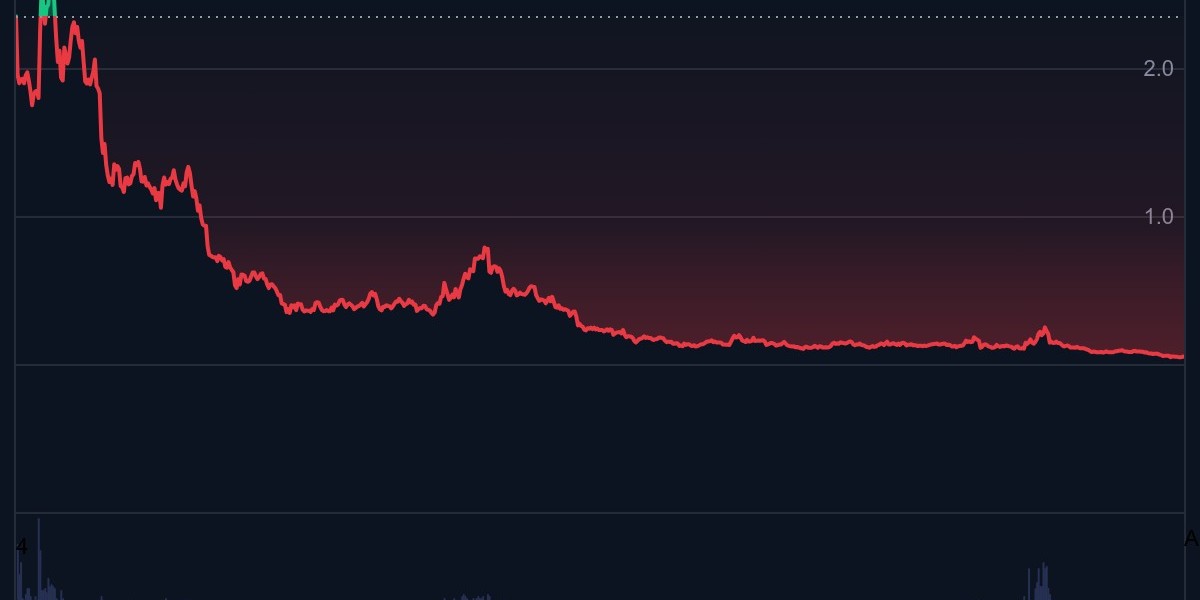
And the chart we see puts hard numbers on that gap.
Starknet in One Sentence: Big Valuation, Tier-1 Backing… Tiny Real Usage
Here’s what the data is basically screaming:
- Listed at ~$2.75B FDV (Feb 2024)
- “Yesterday” generated only ~$1,900 in fees
- STRK trading below $0.05
- ~98% drop from listing price
- Raised $282M from top names (Paradigm, Sequoia, Pantera, Polychain + Vitalik mentioned)
Last round valued it at ~$8B
And then the punchline:
> What did $282M and an $8B valuation produce?
Daily fees around $2,000–$5,000 (and even lower on some days),
TVL ~ $290M (with the note that most of it is staked BTC, not organic DeFi),
and a token that massively de-rated.
This is not “FUD.” This is the difference between a story and a scoreboard.
The Unlock Schedule Turns a Weak Scoreboard Into a Slow Bleed
Numbers also points to the part most people ignore until it’s too late: supply pressure doesn’t care about narratives.
- Every month: ~127M STRK unlocked for early contributors and investors
- Even after a $6M of new sell pressure per month**
- On a token with a market cap of roughly ~$250M
This is how “great tech” dies financially:
1. Incentives bring temporary users
2. Incentives fade → activity drops
3. Fees collapse
4. Unlocks continue
5. Market needs real demand to absorb supply
6. Demand isn’t there → price keeps grinding down
7. Morale drops → builders + users drift away
This is why the chart’s line hits so hard:
> “The technology is not necessarily the problem… The problem is the same as it has always been: There is no demand.”
The Real Lesson: You Don’t Need the 300th Chain. You Need Users.
- Tier-1 listings don’t fix product-market fit. ❌
- VC funding doesn’t fix product-market fit. ❌
- Great cryptography doesn’t fix product-market fit. ❌
If the chain isn’t producing meaningful fees and repeat users, the token becomes a speculative instrument attached to a weak cashflow engine.
That’s the Demand Era in one concept:
> The market is starting to price usage, not promises.
So What’s Different About ByteChain?
Here’s the brutal truth: ByteChain cannot win by being “another chain.”
If you pitch it as “faster, cheaper, better tech,” you’re walking into the same graveyard.
- ByteChain’s differentiation only works if we frame it correctly:
- ByteChain is not a standalone chain chasing demand.
- ByteChain is the execution layer of a full ecosystem designed to create demand.
That ecosystem matters because demand is not created by infrastructure alone. It’s created by distribution + product loops.
ByteChain Isn’t Alone: It Ships With Its Own Distribution and Product Loops
Most L2s have to hope for distribution.
ByteChain doesn’t.
It’s integrated with:
- Byte Exchange (CEX exchange): built-in liquidity, markets, and user access
- Launchpad: structured pipeline for new projects + user acquisition
- Swap on ByteChain: on-chain liquidity and usage that isn’t “just a demo”
- ByteMX: advanced trading layer that can drive higher-frequency activity
- BEXC as the ecosystem asset: designed to be used across the stack, not just traded
- RWA tokenization direction: real economic primitives (not only yield loops)
- Byte Lira (TRYs) production: local-currency settlement rail to expand real-world use cases
This matters because it attacks the exact Starknet problem head-on:
> Starknet had technology and funding.
It struggled to keep demand after incentives.
ByteChain is built around an ecosystem that can generate demand from multiple entry points.
Not “one killer dApp.”
Multiple demand engines feeding one ecosystem.
The Correct Problem Definition for ByteChain
If you define the problem as “we need more builders” or “we need more chains,” you will waste years.
The real problem (the only one that matters) is:
> How do we create sustainable user demand that generates recurring fees — without relying on mercenary incentives?
Because incentives are not demand. Incentives are rented attention.
And rented attention leaves the moment the rent drops.
Why the Ecosystem Model Changes the Game
Starknet’s numbers show what happens when the value proposition is mostly future-facing.
ByteChain’s model is different if executed properly:
- A user can enter through Bytedex trading, not just on-chain DeFi
- A project can enter through Launchpad + CEX listing + swap liquidity, not just “deploy a contract”
- Communities can form and convert via Kupr.io (distribution + content + trust signals)
- The ecosystem asset (BEXC) has multiple utility touchpoints across the system
- Real-world rails (RWA + TRYs) can create repeat behavior, not only speculative behavior
That’s the difference between:
“a chain hoping people build demand” vs
“an ecosystem engineered to produce demand.”
The Demand Era Has Started — And That’s Good News (If You’re Honest)
Starknet is still here, sure. But the these example's final warning is the one you should remember:
> the chain is still here… but so is its unlock schedule.
In the Demand Era, you don’t get to hide behind tech.
You either:
build products people actually use, that generate meaningful fees
or
watch the token slowly absorb the consequences of low demand + continued supply
ByteChain’s edge is not that it’s “another chain.”
ByteChain’s edge is that it sits inside a full stack: exchange + launch + swap + derivatives + social distribution + ecosystem asset + real-world rails.
If you execute this with discipline, it’s a fundamentally different game than a standalone L2.
And if you don’t—if you drift into “we’re also a chain” marketing—then you’ll become another painful example for others one day.
That’s the standard now.
Demand is the product!
Ismail Koseoglu- CEO Bytedex













İsmail Köseoğlu 27 W
Exactly that's the hint behind any bussiness. If there is no demand there is no value